
Industrial Vacuum Forming & Thermoforming
When your component is too large for an injection press, or your production volume doesn't justify a $50,000 steel mold, Custom Molding Company provides heavy-gauge industrial vacuum forming. Operating from our quality-assured facility in South Africa, we deliver large-format plastic enclosures and trays at highly competitive landed costs.
Vacuum forming (a simplified form of thermoforming) involves heating a flat sheet of thermoplastic until it becomes pliable, stretching it over a single-surface mold, and applying a vacuum to pull the sheet tight against the mold geometry. Once cooled, the part retains its shape and is transferred to our CNC finishing department for precision trimming.
Vacuum Forming Specs
- Heavy-Gauge Sheet (up to 12mm)
- Large Format Enclosures
- Low Tooling Cost (Aluminum/Epoxy)
- 5-Axis CNC Trimming
- In-Mold Texturing
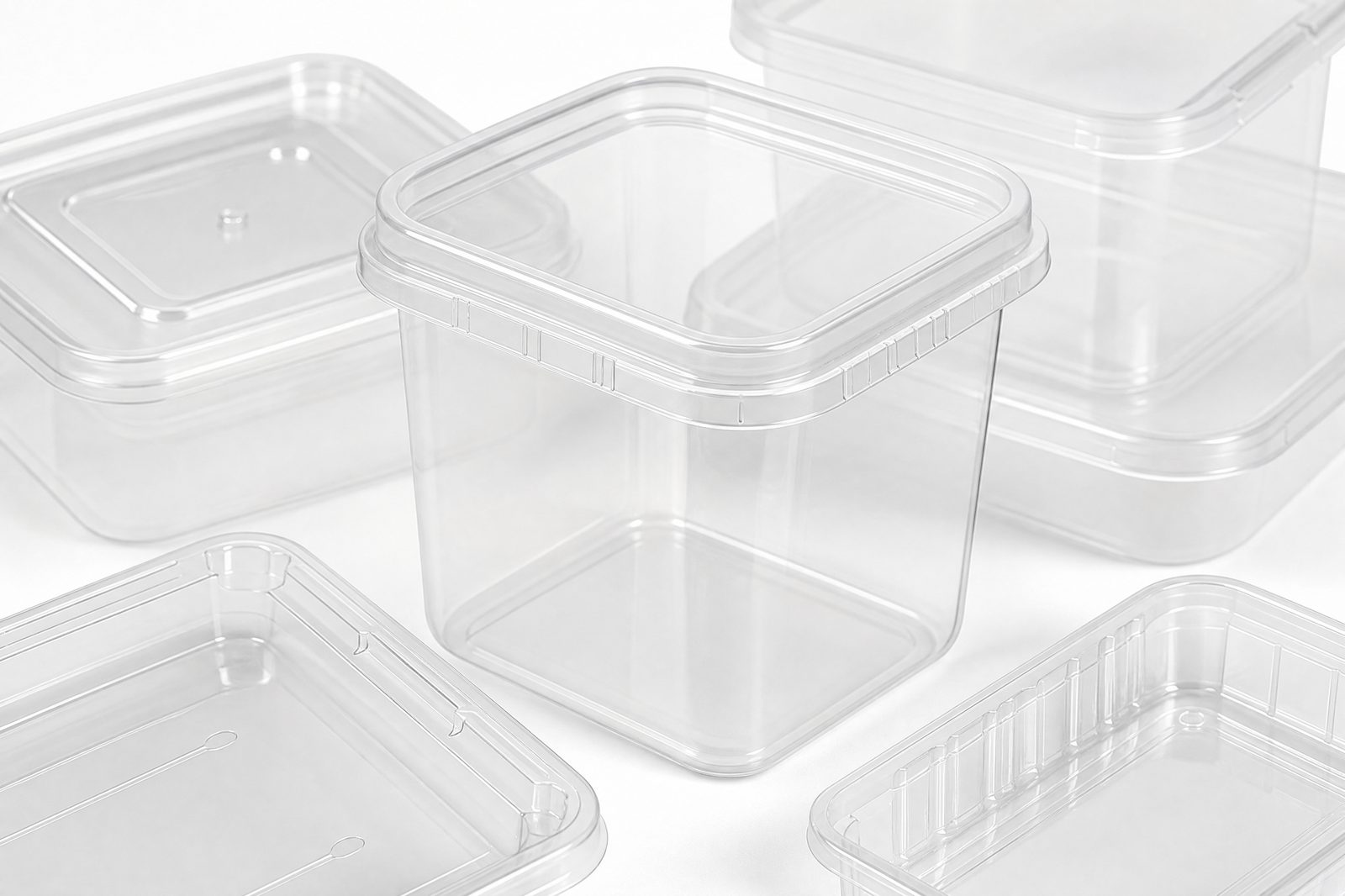
Tooling Economics: Why Vacuum Forming Wins
The primary advantage of vacuum forming is the tooling cost. Injection molding requires massive, two-part hardened steel tools capable of withstanding thousands of tons of clamp pressure. Vacuum forming only requires a single-sided tool (either a male "plug" or a female "cavity") that only needs to withstand 14.7 psi of atmospheric pressure.
| Tooling Material | Production Volume | Cost Profile | Lead Time |
|---|---|---|---|
| MDF / Wood | 1 - 50 units (Prototyping) | Extremely Low | 1-2 Weeks |
| Cast Epoxy Resin | 50 - 500 units | Low | 2-3 Weeks |
| Cast/Machined Aluminum | 500 - 50,000+ units | Medium (fraction of steel) | 4-6 Weeks |
5-Axis CNC Trimming & Finishing
Vacuum forming is a near-net-shape process. The formed part remains attached to the surrounding plastic sheet and must be separated. At Custom Molding Company, we utilize advanced 5-axis CNC routing stations to perform post-mold finishing.
Our robotic routers follow precise CAD toolpaths to cut the final perimeter, machine out internal windows (e.g., for display screens or ventilation), and drill mounting holes. This ensures that every vacuum-formed enclosure meets the exact dimensional tolerances required for final assembly.
Common Materials & Applications
- ABS (Acrylonitrile Butadiene Styrene): The most common thermoforming material. Excellent impact resistance. Used for automotive interior panels, luggage boxes, and medical equipment housings.
- HIPS (High-Impact Polystyrene): Cost-effective, easy to form, and readily printable. Widely used for point-of-purchase (POP) displays and custom packaging trays.
- HDPE & Polycarbonate: Used for heavy-duty industrial applications, radomes, and protective covers requiring high impact and chemical resistance.
Have a Large-Format Project?
Upload your CAD file securely. We'll evaluate if vacuum forming or injection molding is the most cost-effective path.
Upload CAD FileLanded Cost Arbitrage Calculator
Compare standard US/UK manufacturing against our quality-assured South African facility.