
Custom Plastic Injection Molding
We are a premier custom plastic injection molding company delivering high-tolerance, multi-cavity tooling from our ISO-certified South African facility. As a leading global custom molding company, we cut your P20 and H13 steel mold costs by 40-60% without sacrificing the engineering precision required for medical device, automotive, and consumer product applications.
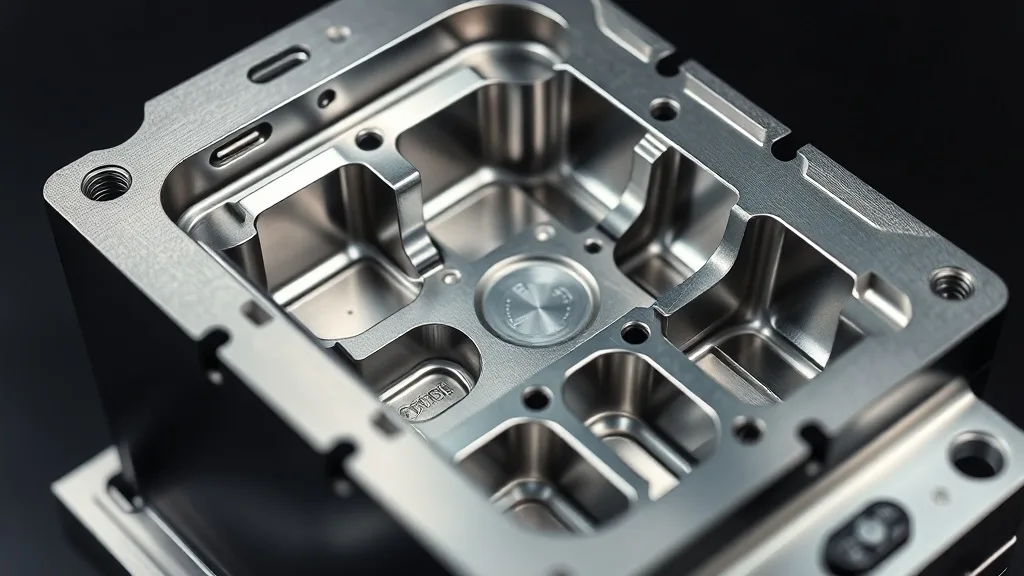
Precision-machined P20 multi-cavity injection mold — Sandton, South Africa
Why Manufacture Offshore with Us?
The structural strength of the USD and GBP against the South African Rand allows our facility to deliver Tier-1 engineering quality at a fraction of Western tooling costs. Our English-speaking mechanical engineers conduct rigorous DFM reviews and mold-flow analysis prior to cutting steel, ensuring that your first-shot parts meet dimensional specifications without costly mold modifications.
Our Tooling Capabilities
- Single & Multi-Cavity Tooling: 1 to 32 cavities, optimized for your annual volume requirements.
- P20 Pre-Hardened Steel: Ideal for 100,000–500,000 shot production runs. 12-18% lower tooling cost vs H13.
- H13 Hot-Work Steel: Mandatory for 1M+ shot programs, glass-filled resins, and SPI A1/A2 mirror finishes.
- Side Actions & Lifters: Complex undercut geometry handled in-house with no sub-contractor delays.
- Hot Runner Systems: Valve-gated and open-tip hot runner manifolds for zero-waste, high-cavitation tooling.
Scientific Molding Principles
We do not rely on "rule of thumb" machine setups. Our production floor operates on strict Scientific Molding (Decoupled Molding) principles. This methodology separates the injection process into three distinct stages: Fill, Pack, and Hold.
During the Fill stage, the machine injects polymer based on velocity rather than pressure, filling the cavity to 95-98%. The machine then switches to pressure-controlled Pack and Hold stages to compensate for volumetric shrinkage as the plastic cools. By decoupling these stages, we establish a robust process window that is immune to natural variations in resin lot viscosity, ensuring every part is dimensionally identical, shot after shot, year after year.
The Mold Tryout (T1) Process
The T1 (Tooling 1) phase is the most critical milestone in custom injection molding. Once the steel is cut and the mold is assembled, it is mounted in the press for its first shots.
During T1, we are not trying to produce perfect parts; we are interrogating the tool. We perform short-shot studies to verify balanced filling across all cavities, identify any trapped gas causing diesel burns, and evaluate the effectiveness of the cooling channel layout. The T1 samples are then subjected to a full First Article Inspection (FAI) using CMM equipment. We provide you with the FAI report, the physical T1 samples, and our engineering recommendations for any necessary steel-safe tool modifications before proceeding to T2 and final production approval.
Managing Tolerances (SPI Standards)
Injection molding is a thermal process involving thousands of pounds of pressure, making "zero tolerance" impossible. However, we strictly adhere to the Society of the Plastics Industry (SPI) dimensional tolerance guidelines.
For rigid amorphous polymers like Polycarbonate or ABS, we can routinely hold "Fine" tolerances of ±0.05mm (±0.002") on critical dimensions. For semi-crystalline polymers with high shrinkage rates like HDPE or Nylon, "Commercial" tolerances of ±0.15mm (±0.006") are standard. Our DFM process explicitly highlights any CAD dimensions that fall outside the achievable SPI tolerance bands for your selected material, allowing us to adjust the design before cutting steel.
Hot Runner vs. Cold Runner Systems
The runner system is the plumbing that delivers molten plastic from the machine nozzle to the mold cavities. We engineer both cold runner and hot runner tools based on your production economics.
Cold Runner Systems are less expensive to build and easier to maintain. However, the plastic in the sprue and runner solidifies with every shot and must be ejected, creating scrap material that must be reground or discarded, which increases the per-part piece price.
Hot Runner Systems utilize an electrically heated manifold within the mold to keep the plastic molten all the way to the cavity gate. While the initial tooling capital expenditure (CapEx) is higher, hot runners eliminate runner scrap entirely, reduce cycle times, and lower injection pressures. For high-volume production runs (100,000+ parts/year), the raw material savings from a hot runner system will quickly amortize the higher tooling cost.
Compare Your Tooling Costs
Select your material and volume to see the exact landed cost comparison.
Landed Cost Arbitrage Calculator
Compare standard US/UK manufacturing against our South African ISO-certified facility.